
India's top listed companies reported their best-ever quarterly net profit of Rs 2.39 trillion in the September quarter of FY22, up 46.4 per cent year-on-year. The earnings were driven by a big surge in the profitability of banks, non-banking financial companies & insurance (BFSI), oil & gas, and metal & mining firms. The combined net profit of these three cyclical sectors were up 87 per cent YoY to a record high of Rs 1.53 trillion, up from Rs 82,000 crore a year ago and Rs 1.08 trillion in Q1FY22.

Ajit Mishra answers reader queries on the stock market.

India's jugalbandhi with coal and clean energy is coming unstuck, neither achieving adequate renewable generation nor ensuring sufficient coal-fired power in the quest to become a $5-trillion economy. Six months have elapsed since Prime Minister Narendra Modi announced an ambitious climate agenda for India at COP26 at Glasgow. The net zero emissions target by 2070 is a distant one, but there are nearer-term plans to meet 50 per cent of energy demand with renewables by 2030 by increasing capacity to 450 Gw. A cursory look at the balance sheet of India's climate progress since November reveals ponderous progress towards meeting the renewables target even as the country is scrambling to expand coal-fired generation in the face of a power crisis.

Equity benchmarks Sensex and Nifty ended on a mixed note on Wednesday as the euphoria about the Budget fizzled out, with investors going for profit-taking ahead of the Fed interest rate decision. The 30-share BSE benchmark Sensex climbed 158.18 points or 0.27 per cent to settle at 59,708.08 after it trimmed most of the intra-day gains. During the day, it had zoomed 1,223.54 points or 2 per cent to 60,773.44.

Ajit Mishra, vice president, Research, Religare Broking, answers your queries.

Ajit Mishra, vice president, Research, Religare Broking, answers your queries.

The fall in metal and mining stocks comes on the back of weak Chinese trade data

Ajit Mishra, vice president, Research, Religare Broking, answers readers' queries on stocks they own or want to buy.

TCS, Infosys and Wipro were down 0.4-2% each. Capital goods majors also ended lower with L&T and BHEL down 1.4-3.9% each.

Ajit Mishra, vice president, research, Religare Broking, answers your queries.

Ajit Mishra, vice president, Research, Religare Broking, answers your queries.
India's traditional companies are now moving full scale into the renewable and alternative energy space that had been dominated by smaller players over the past decade. Companies such as government-owned NTPC and the Adani and the Tata groups restructured their businesses well in time to become major players in the green space. At the same time, other conventional companies, such as Larsen & Toubro and Reliance Industries Ltd (RIL), which have a presence both in the energy sector as well as myriad other activities - construction, technology and retailing - are tying up with new-age companies to hitch a ride to a greener path.

The broad market depicted strength. 1,525 shares rose and 1,131 shares fell. A total of 156 shares remained unchanged

Ajit Mishra, vice president, Research, Religare Broking, answers your queries.
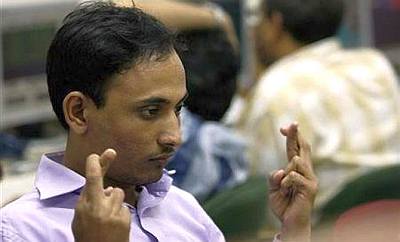
Investors remain cautious ahead of F&O expiry.

The index had risen over 585 points in the previous three sessions.

Indian companies are planning to increase investments in the new year to expand capacity, acquire companies, and go on a hiring spree, a survey of top executives showed. They, however, cited rising costs, weak consumer demand, and increasing interest rates as major concerns for 2023 which may impact their plans.

Tata Consultancy Services (TCS) is India's most-valuable brand in 2022 replacing HDFC Bank, which held the number one spot since 2014, according to Kantar BrandZ report on India's most-valuable brands. TCS was able to grab the top slot due to rising global demand for automation and digital transformation, following the pandemic. Indian brands have bounced back from the pandemic to increase their brand value by 35 per cent compound annual growth rate (CAGR) since 2020.

While Nifty 50 reflects changes in 40 years, it also shows what is missing: Low-cost manufacturers at one end, and deep-value players at the other. Also missing are technology players, observes T N Ninan.

Analysts attribute this fall to the recent moderation in energy (mainly crude oil) and commodity prices, lowering of input costs for companies in sectors such as FMCG, consumer durables, and automobiles, reports Krishna Kant.

Ajit Mishra, vice president, Research, Religare Broking, answers your queries.

Indian companies are expecting generous tax incentives from the Union Budget that will help them invest more in building capacities in the coming years. While the productivity-linked incentives (PLIs) are a good start to spur local manufacturing, the government should also take steps to boost consumer demand, which is not showing encouraging signs, say chief executive officers (CEOs) of India Inc. Statistics released by the Reserve Bank of India (RBI) shows that Indian banks had sanctioned loans worth Rs 75,558 crore in 220 new projects - a record low - in the pandemic-hit financial year ending March 2021. This is not showing any signs of a significant pick up in the last nine months of the ongoing financial year.

More than a year of Covid-19 has pushed most businesses into gloom but Reliance Industries Ltd (RIL) managed to reduce its gross debt 25 per cent, enabling it to turn towards its next phase of capital expenditure that has come in the form of a Rs 75,000-crore plan for green energy and power storage. The company managed to stay afloat during the pandemic because of its large presence in the consumer-centric businesses of retail and telecommunication (see chart: "A new Reliance"). These two businesses constituted 45 per cent of its EBITDA during FY21 from 36 per cent in FY20.

Among Sensex constituents, Vedanta fell 3.40 per cent, followed by SBI 3.17 per cent, Yes Bank 3.11 per cent, Axis Bank 1.68 per cent, ONGC 1.60 per cent, Power Grid 1.52 per cent and HDFC 1.48 per cent.
Domestic market is losing its trend to rate sensitive stocks post the announcement of the new RBI governor who is likely to maintain a cautious stance on interest rate cut
Sensex ended up 190 points at 25,519 and Nifty climbed 57 points to end at 7,626.

The Hinduja Group, Mukesh Ambani, Murugappa, and the Adani groups were the other gainers in the Modi regime, while Naveen Jindal and Sun Pharma groups saw the most erosion in their m-cap in the last five years, reports Krishna Kant.

Hailing Prime Minister Narendra Modi and the Bharatiya Janata Party government, top industry captains pledged mega investments at the Vibrant Gujarat Global Summit

Samvat 2070 was a great year for top Indian conglomerates in the stock markets.

The companies are crying foul over the cancellation of 25 blocks held by 68 firms over the past two days.

Top gainers include Yes Bank, HUL, Vedanta, NTPC, Bharti Airtel, Adani Ports, PowerGrid and Tata Motors, rising up to 5 per cent.

Coal India was the biggest gainer on both Sensex and Nifty

Ajit Mishra, vice president, Research, Religare Broking, answers your queries.

The Year of the Rabbit, according to the Chinese calendar, began on Sunday, January 22.

Days before US President Barack Obama's high-powered visit here, the US-India CEO Forum has been reconstituted with Cyrus Mistry replacing Ratan Tata as its co-chairman

Ajit Mishra, vice president, Research, Religare Broking, answers your queries.

Ajit Mishra, vice president, Research, Religare Broking, answers your queries:

Strong gains in metal, energy, auto and power shares lifted the key indices to new highs.

From 5G to Tesla to Covid vaccine, 10 things will shape India's future.

Prime Minister Narendra Modi and industrialist Mukesh Ambani feature amongst the most searched personalities online this year, according to search engine Yahoo.
 © 2026 Rediff.com - Advertise with us - Disclaimer - Privacy Policy - Sitemap - Feedback - About us - Terms of use - Grievances